Let Us Give Our Children to God
Certain of the power of silent and faithful prayer, Eliza Vaughan set aside an hour of adoration each day in the house chapel, praying for vocations in her family. In becoming the mother of six priests, she was greatly answered.

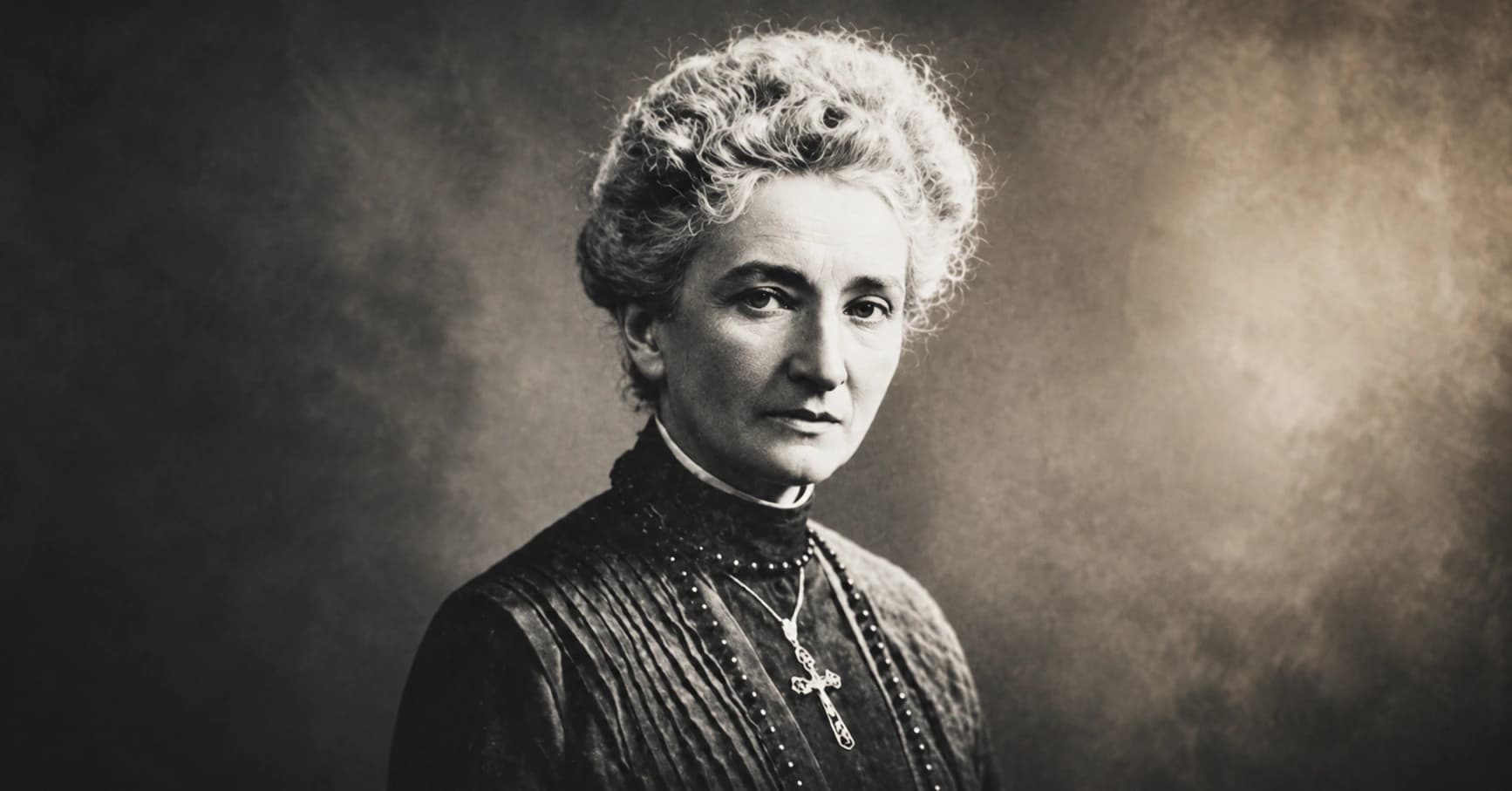
It is a fact that vocations to the priesthood must be prayed for; Jesus speaks about it himself in the Gospel: “The harvest is abundant, but the labourers are few; so ask the master of the harvest to send out labourers for his harvest!” (Mt. 9:37-38) The English woman Eliza Vaughan is a particularly encouraging example of a mother imbued with a priestly spirit who frequently prayed for vocations.
Eliza came from a strong Protestant family; in fact, it was one of the founders of the Rolls-Royce car company. Yet even during her childhood education in France, she was deeply impressed by the exemplary efforts of the Catholic Church toward the care of the poor.
After she married Colonel John Francis Vaughan in the summer of 1830, Eliza converted to the Catholic Faith, despite the objection of her relatives. During the Catholic persecution in England under Queen Elisabeth I (1558-1603), the Vaughan’s ancestors preferred imprisonment and expropriation to being unfaithful to their beliefs.
Courtfield, the ancestral family home, became a place of refuge for priests during the decades of terror in England, a place where the Holy Mass was often celebrated secretly. Nearly three centuries had now passed, but the Catholic beliefs of the family had not changed.
So profound and zealous was Eliza’s religious conversion that she proposed to her husband to offer all of their children back to God.
This remarkable woman made a habit of praying for an hour each day before the Blessed Sacrament in the house chapel at Courtfield. She prayed to God for a large family and for many religious vocations among her children. And her prayers were answered! She bore 14 children, and died shortly after the birth of the last child, John, in 1853.
Of the 13 children that lived, six of her eight boys became priests: two priests in religious orders, one diocesan priest, a bishop, an archbishop and a cardinal. From the five daughters, four became nuns in religious orders. What a blessing for the family, and what an impact on all of England!
The Vaughan children enjoyed a pleasant childhood because their virtuous mother knew how to educate them in a very natural way by uniting spiritual and religious obligations with amusement and cheerfulness. Thanks to their mother, prayer and daily Mass in the house chapel were just as much a part of everyday life as music, athletics, amateur theatre, horse riding and playing. It was never boring for the children when their mother told them stories from the lives of the saints, who little by little became their dearest friends.
Eliza happily let her children accompany her on visits to the sick and needy of the area. On such occasions, they learned how to be generous, to make sacrifices and to give away their savings or their toys.
Shortly after the birth of her 14th child, Eliza died. Two months after her death, Colonel Vaughan wrote in a letter that he was convinced divine providence brought Eliza to him.
I thanked the Lord in adoration today that I could give back to him my dearly beloved wife. I poured out my heart to him, full of thankfulness that, as an example and a guide, he gave me Eliza with whom I am still now bound by an inseparable, spiritual bond. What wonderful consolation and grace she brought me! I still see her as I always saw her before the Blessed Sacrament: her inner purity and extraordinary human kindness which her beautiful face reflected during prayer.
Labourers in the vineyard of the Lord
The many vocations from the Vaughan family are a unique legacy in British history and a blessing which came especially through their mother, Eliza.
At the age of 16, Herbert, the oldest son, shared his priestly vocation with his parents. Their reactions were very different. His mother, who had prayed a great deal for it, smiled and said, “Child, I have known it for a long time.” His father, however, needed a little time to come to terms with the decision, since the inheritance goes to the oldest, and he had hoped Herbert would have a prestigious military career. How could he have known that his son would one day be the Archbishop of Westminster, founder of the Millhill Missionaries and then a Cardinal? Yet the father also bowed to his wishes writing once to his friend, “If God wants Herbert for himself, he can have all the others as well.”
Although Reginald married, as did Francis, who inherited the family estate, the Lord did call nine other Vaughan children. Roger, the second oldest, became a Benedictine prior and later the beloved Archbishop of Sydney, Australia, where he built the Cathedral. Kenelm was a Cistercian and later a diocesan priest; Joseph, the fourth son, became a Benedictine like his brother and founded a new abbey.
Bernard, the most lively of them all, loved dancing, sports and anything fun; he became a Jesuit. On the day before he entered the order, he went to a ball where he told his dance partner, “This dance with you is my last, because I am joining the Jesuits.”
Shocked, the girl replied, “Really? You want to become a Jesuit!? But you who love the world so much and are such an excellent dancer!?”
His equivocal, but beautiful answer was, “That is why I am consecrating myself to God.”
John, the youngest, was ordained a priest by his oldest brother, Herbert, and later became the Auxiliary Bishop of Salford, England.
Four of the five daughters in the family entered convents. Gladis entered the Order of the Visitation, Teresa joined the Sisters of Mercy, Claire became a Poor Clare, and Mary an Augustinian prioress. Margaret, the fifth Vaughan daughter, wanted to be a religious sister, but could not do so because of her poor health. Consecrated to God, she lived at home, but spent the last years of her life in a convent.